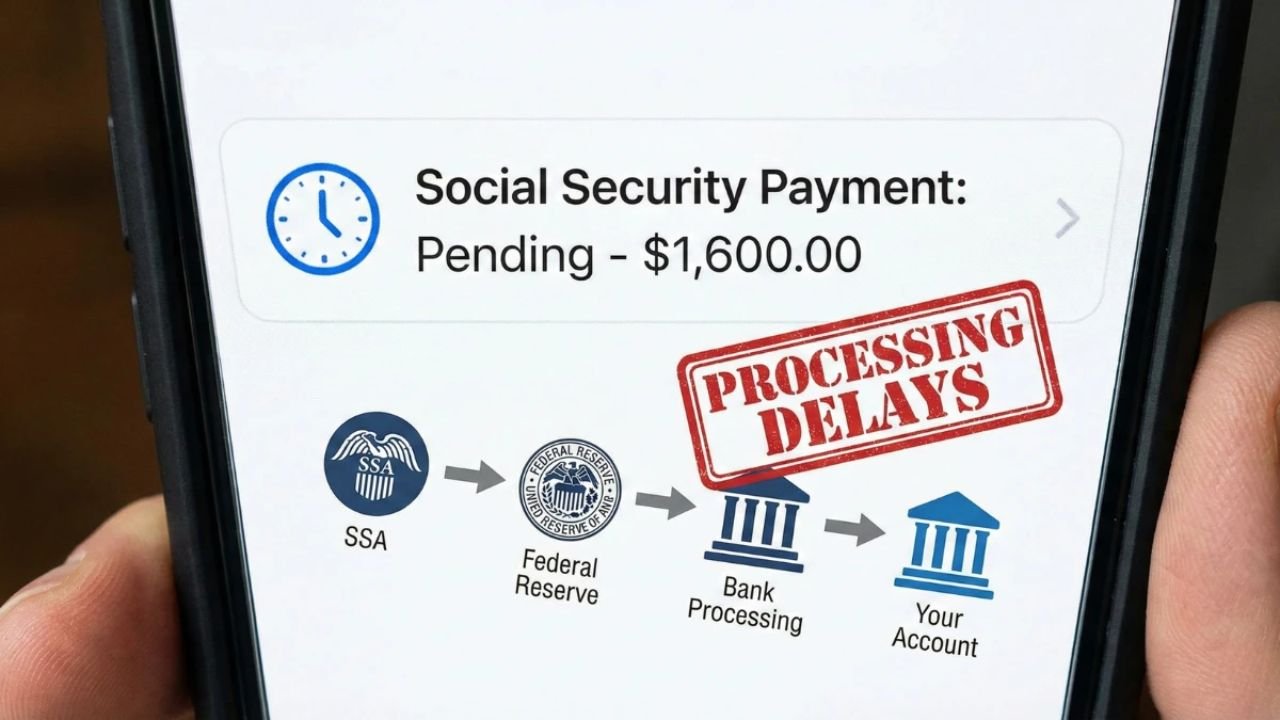
Many Social Security beneficiaries notice that their monthly payment appears as “pending” in their bank account before the funds are actually available. This status can cause concern, but in most cases, it is a normal part of the payment and banking process—not a problem with the benefit itself. Understanding why payments show as pending and how timing works can help recipients avoid unnecessary worry and know when action is actually needed.
What “Pending” Means for Social Security Payments
A “pending” status indicates that the payment has been sent by the Social Security Administration (SSA) and received by the bank, but the bank has not yet posted the funds for use. Once the SSA transmits the payment, the agency has no control over when the bank makes the money available.
How Social Security Payments Are Released

Social Security payments are issued on scheduled dates based on a beneficiary’s birth date or benefit type. After the SSA releases the funds, the U.S. Treasury routes the payment to financial institutions. Banks then apply their own posting and settlement procedures, which can vary depending on internal processing cycles.
Common Verified Reasons Payments Show as Pending
| Reason | Explanation |
|---|---|
| Bank processing time | Funds await internal posting within the bank’s system |
| Early deposit notification | Bank may display the payment before the funds are officially released |
| Weekend or holiday | Posting is delayed until the next business day |
| Batch processing | Payments are cleared in scheduled cycles rather than individually |
| New account or recent change | Additional verification may be required before release |
Does “Pending” Mean the Payment Is Delayed or Reduced?
No. A pending status does not indicate a delay, reduction, or suspension of benefits. It simply reflects the bank’s processing stage. The payment amount remains unchanged, and the SSA has already completed its part of the transaction.
How Long Pending Status Usually Lasts
In most cases, pending payments are posted within one business day. Some banks release funds early in the morning, while others wait until standard business hours. Variations in timing are normal and do not affect the scheduled payment amount.
When Beneficiaries Should Take Action

The SSA recommends waiting up to three business days after the scheduled payment date before reporting an issue. If the payment is still not posted, beneficiaries should:
- Contact their bank to confirm the status of the deposit.
- Reach out to the SSA only if the bank confirms the funds have not been posted.
This stepwise approach avoids unnecessary alarm and ensures any real issue is properly addressed.
Key Facts
- “Pending” means the bank has received the payment but has not posted it yet
- The SSA has already released the funds
- Banks control the final posting time
- Weekends and holidays commonly affect timing
- Most pending payments clear within one business day
Conclusion
When a Social Security payment appears as pending, it is usually part of normal banking procedures rather than a benefit problem. Knowing how the SSA and banks handle payments helps beneficiaries understand timing variations, avoid unnecessary concern, and determine when follow-up is actually necessary.

Disclaimer
This article is for informational purposes only and does not constitute financial or legal advice. Social Security payment timing depends on federal procedures and individual bank processing policies.