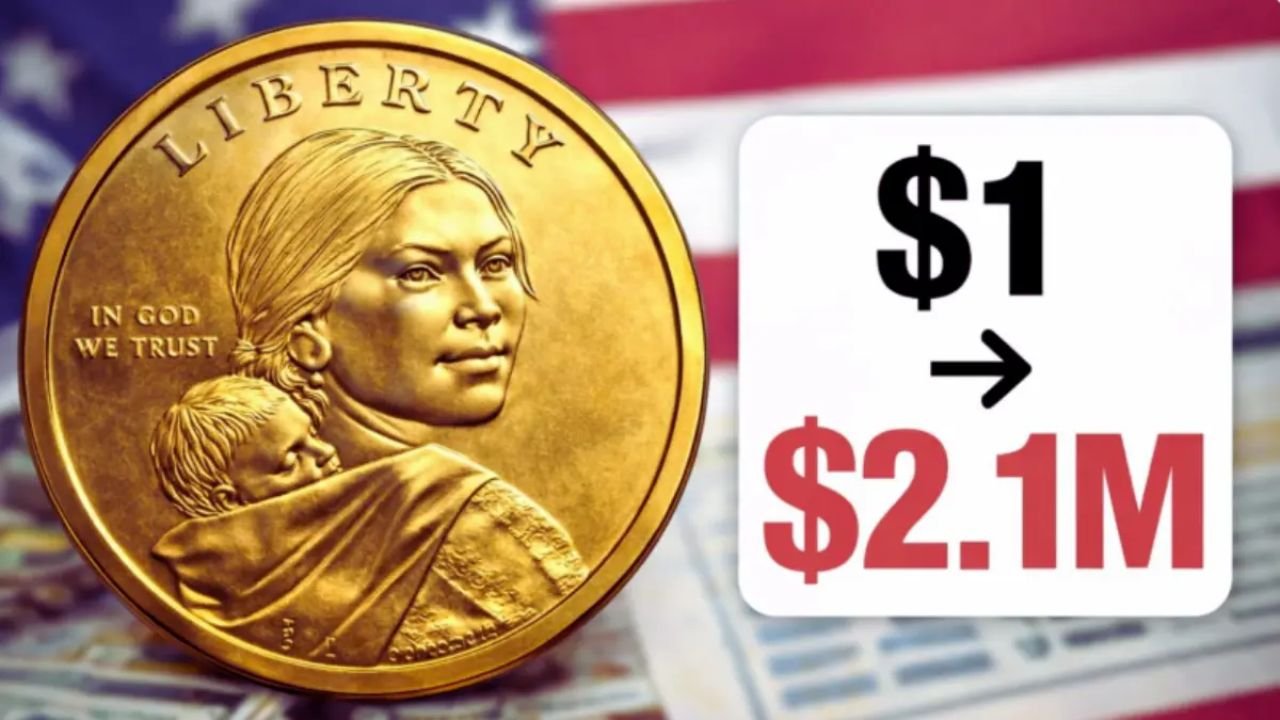
The Sacagawea Dollar is often seen as an ordinary modern U.S. coin, frequently overlooked in change jars and collections. Yet as 2026 unfolds, one rare version has firmly secured its place among the most valuable modern American coins ever sold. Known widely as the Cheerios Sacagawea Dollar, this extraordinary piece has reached values exceeding $2.1 million under the right conditions. Its story combines history, marketing, design variation, and extreme scarcity, making it a centerpiece of modern numismatics.
Understanding why this coin is worth so much requires a closer look at its origins, unique features, and how collectors can correctly identify it.
Origins of the Sacagawea Dollar

The Sacagawea Dollar was introduced by the U.S. Mint in 2000 as a replacement for the Susan B. Anthony Dollar, which struggled with public acceptance due to its similarity in size and color to the quarter. To address this issue, the Mint introduced a distinctive golden-colored manganese-brass alloy intended to stand out in circulation.
The obverse features Sacagawea carrying her infant son, Jean Baptiste, symbolizing guidance, exploration, and Native American heritage. The reverse displays a soaring bald eagle, representing freedom and national expansion. Although the design was widely praised, the coin never gained consistent traction in everyday use, leading many to assume it held little collector value.
The Cheerios Promotion That Created a Rarity
In early 2000, the U.S. Mint partnered with General Mills in a nationwide promotional campaign to raise awareness of the new dollar coin. Approximately 2.1 million Sacagawea Dollars were sealed inside Cheerios cereal boxes and distributed across the country.

At the time, this promotion seemed like a simple marketing effort. Years later, collectors discovered something remarkable. Many of the promotional coins were struck using an early prototype reverse design that differed subtly but significantly from the standard circulation version.
This discovery transformed what appeared to be an everyday coin into a legendary rarity.
What Makes the Cheerios Sacagawea Dollar Different
The defining feature of the rare Sacagawea Dollar lies in the reverse design, specifically the eagle’s tail feathers.
The Enhanced Tail Feather Detail

On the Cheerios variety, the eagle’s tail feathers are longer, more sharply defined, and deeply etched. The feathers show clear separation and detail that is absent from regular production coins. Standard circulation Sacagawea Dollars have smoother, less detailed tail feathers.
This design difference resulted from early dies created before the final reverse design was standardized for mass production. Once the design was finalized, the enhanced tail feather version was discontinued, leaving only the promotional coins as surviving examples.
How to Identify a Potential $2.1M Sacagawea Dollar
Correct identification is essential, as millions of Sacagawea Dollars exist that are worth only face value.
Year and Appearance
The rare variety must be dated 2000. However, not all 2000-dated Sacagawea Dollars are valuable. The date alone is not enough.
Reverse Examination
The reverse must be carefully examined under magnification. Look for sharply defined, elongated tail feathers with clear separation. This detail is the primary indicator of the Cheerios variety.
Packaging Is Not Proof
While original Cheerios packaging can add historical interest, it does not guarantee the coin is the rare version. Some promotional coins were standard strikes, and packaging alone does not confirm value.
Why Some Examples Are Worth Over $2.1 Million
Although approximately 2.1 million coins were distributed through the Cheerios promotion, only a small fraction featured the rare reverse design. Even fewer survived in pristine condition.
Most were spent, handled, or damaged over time. Coins that remain uncirculated and later receive top professional grades are exceptionally rare. When one of these high-grade examples appears at auction, intense competition among elite collectors can drive prices into the millions.
The $2.1 million figure reflects a perfect combination of rarity, condition, authentication, and market demand.
The Role of Professional Coin Grading
Professional grading is critical for confirming authenticity and value.
Authentication and Trust
Third-party grading services verify the presence of the enhanced tail feather design and assign an official grade based on condition. Certified coins command far higher prices because buyers trust the evaluation.
Long-Term Value Protection
Grading also protects the coin from damage and provides long-term market credibility. For coins of this value level, professional certification is essential for resale or auction placement.
Collector and Investment Appeal in 2026
The Cheerios Sacagawea Dollar holds a unique position in modern U.S. coin collecting. It combines a compelling backstory, a visually identifiable design difference, and a limited supply of surviving high-grade examples.
Collectors are drawn to its accessibility narrative, a coin that once came free in a cereal box and later became a multimillion-dollar treasure. Investors value its proven auction performance and continued demand within the numismatic community.
Even in 2026, interest remains strong, and the coin continues to be featured prominently in discussions of modern U.S. rarities.
Common Misconceptions About Sacagawea Dollars
Many people assume any golden-colored dollar from 2000 could be valuable. This is not the case. The vast majority of Sacagawea Dollars, including those from later years, remain worth face value.
Only the specific Cheerios variety with the enhanced tail feathers qualifies for extraordinary valuation. Careful inspection and professional confirmation are essential before drawing conclusions.
Final Thoughts
The $2.1M Sacagawea Dollar stands as proof that even modern coins can become historic treasures. Its value lies not in age alone, but in a rare combination of design variation, limited survival, and collector demand.
For collectors, this coin serves as a reminder to look closely at what may seem ordinary. With careful inspection, proper knowledge, and professional authentication, the extraordinary can still be found in unexpected places.
Disclaimer
This article is for informational purposes only. Coin values depend on condition, rarity, certification, and market demand, all of which can change over time. Prices mentioned are not guaranteed. Always consult certified grading services or professional numismatists before buying, selling, or investing in collectible coins.