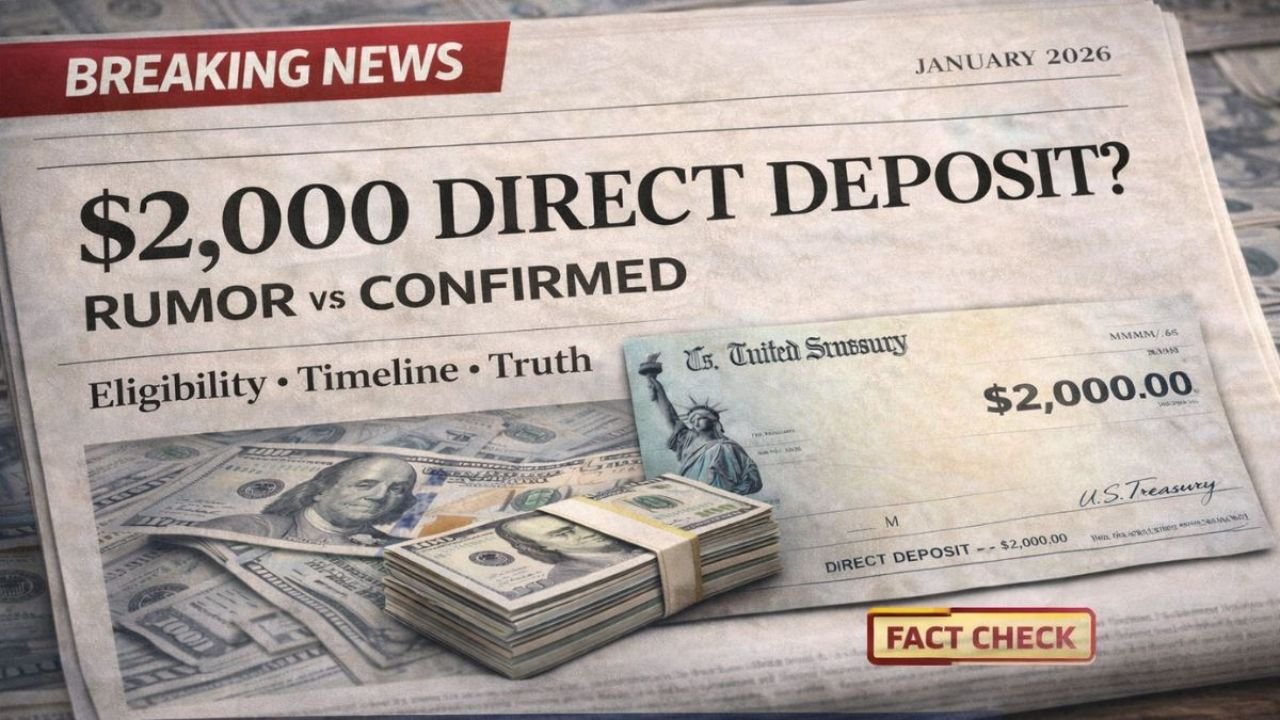
As January 2026 approaches, online conversations around a supposed $2,000 direct deposit have intensified. Social media posts, short videos, and discussion forums are filled with claims that the federal government has approved a payment for Americans to help offset rising living costs. With households still adjusting to higher expenses for housing, food, healthcare, and utilities, it is understandable why such news captures attention so quickly.
However, separating verified facts from online speculation is essential. While the idea of a $2,000 payment sounds familiar and appealing, the current situation is far more nuanced than viral headlines suggest.
Understanding Where the $2,000 Figure Comes From

The $2,000 amount is strongly tied to memories of pandemic-era stimulus checks. During that period, direct payments were issued rapidly and widely, setting a precedent in the public mind. Since then, references to that figure have resurfaced repeatedly, often without context.
Old proposals, policy discussions, or incomplete news reports are frequently reshared online as if they reflect new approvals. In many cases, the original source may be months or even years old. Once these posts are removed from their original timeline, they can easily be mistaken for current government action.
This recycling of information is one of the main reasons the $2,000 figure continues to resurface, even when no new payment has been authorized.
No Official Federal Approval Has Been Issued

As of now, there has been no confirmation from Congress, the Internal Revenue Service, or the U.S. Treasury regarding a universal $2,000 direct deposit for January 2026. No legislation has been passed to fund such a payment, and no official guidance has been released outlining eligibility or distribution.
When legitimate federal payments are approved, they follow a clear process. Lawmakers pass legislation, agencies announce details publicly, and official websites provide timelines and instructions. None of these steps have occurred for the January 2026 claim, which strongly indicates that the rumored payment does not exist.
Without formal approval and funding, a nationwide payment program cannot move forward.
Why Some Americans May Still See Deposits Near $2,000

Although there is no new stimulus program, some individuals may still notice deposits close to $2,000 early in the year. These payments are usually connected to existing systems rather than new federal relief.
Tax Refunds and Refundable Credits
One of the most common sources of deposits around this amount is a federal tax refund. Depending on income, withholding, and credits claimed, many taxpayers receive refunds that fall near the $2,000 range. Refundable credits tied to dependents, education, or income levels can significantly increase the final amount.
Because tax refunds often arrive in January or February for early filers, they are sometimes mistaken for stimulus payments.
Routine Federal and Benefit Payments
Certain federal payments continue on regular schedules regardless of online rumors. Veterans’ benefits, military-related payments, and some federal employee compensation adjustments can result in deposits that appear higher than usual.
In addition, some individuals may receive back pay, corrections, or lump-sum adjustments tied to benefits they already qualify for. These payments are legitimate but apply only to specific groups, not the general public.
How Misinformation Spreads So Quickly
Financial topics spread especially fast online, particularly when they involve large numbers and universal promises. A headline suggesting that everyone will receive $2,000 is far more likely to be shared than a detailed explanation of tax refunds or benefit adjustments.
Short-form content often leaves out crucial details such as eligibility, payment sources, and timing. As posts are reshared, the original context disappears, making the claim seem broader and more certain than it really is.
This cycle creates confusion and unrealistic expectations, especially for people who are already under financial strain.
Increased Risk of Scams and Fraud
Whenever rumors of large federal payments circulate, scam activity increases. Fraudsters often use official-sounding language to trick people into sharing personal information. Messages may claim that action is required to “claim” the $2,000 deposit or to “verify” banking details.
Federal agencies do not contact individuals through random texts, social media messages, or emails asking for sensitive information. They also do not charge fees to release benefits or payments. Any request for personal data linked to a rumored payment should be treated as a warning sign.
Staying cautious during periods of widespread financial misinformation is critical for protecting personal and financial security.
What the Government Is More Likely to Do Instead
Experts generally agree that if additional financial support is introduced in the future, it is more likely to take the form of targeted tax credits, benefit adjustments, or program expansions rather than a universal cash payment.
Targeted approaches allow support to reach households most affected by economic pressures while managing overall costs. These changes typically appear through updates to tax rules, benefit formulas, or eligibility thresholds, not through surprise one-time deposits for everyone.
How to Stay Informed the Right Way
The most reliable way to stay informed is to follow official government sources. Updates from the IRS, the Treasury, or other federal agencies provide verified information with clear explanations. These announcements include eligibility criteria, payment methods, and timelines.
Comparing personal situations with viral posts rarely provides clarity. Each taxpayer or benefit recipient has a unique profile, and payments depend on individual circumstances rather than online trends.
Keeping personal information up to date with relevant agencies and reviewing official notices can also help avoid surprises or delays.
Setting Realistic Expectations for January 2026
The idea of a $2,000 direct deposit in January 2026 is not supported by official confirmation. While some individuals may receive payments around that amount through refunds or existing benefits, there is no universal federal program issuing $2,000 to all Americans.
Understanding this distinction can prevent disappointment and help with realistic financial planning. Rather than focusing on a single number circulating online, it is more practical to review your own tax and benefit situation.
The Bottom Line
The $2,000 direct deposit claim for January 2026 reflects online speculation rather than confirmed government action. No federal agency has approved or announced a universal payment of this kind. Deposits that resemble this amount are typically tied to tax refunds, benefit adjustments, or specific payment programs.
Relying on verified information and remaining cautious of viral claims can help reduce confusion and protect against scams. In a complex financial landscape, clarity and accuracy matter more than ever.
Disclaimer
This article is for informational purposes only and does not provide financial, legal, or tax advice. Federal payment programs, benefit rules, and tax policies may change based on legislation and individual circumstances. Readers should consult official government sources or qualified professionals for guidance related to their specific situation.