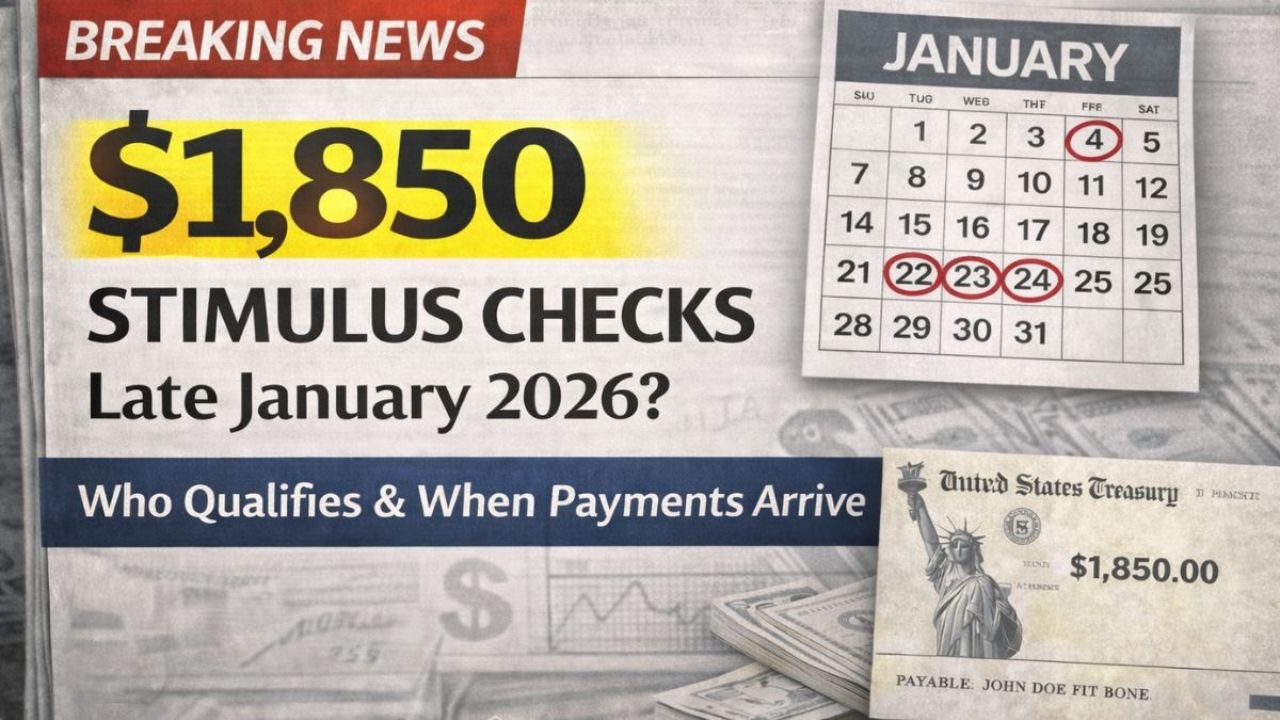
As financial pressure continues to weigh on households across the United States, attention has shifted toward a possible new round of federal relief expected in early 2026. Discussions around $1,850 stimulus checks arriving in the final days of January have intensified, driven by rising living costs and seasonal expenses that tend to peak after the holidays.
While official confirmation ultimately depends on federal action, understanding how these payments are expected to work, who may qualify, and how funds would be delivered can help households prepare and avoid confusion.
Why $1,850 Stimulus Checks Are Being Discussed

The $1,850 amount is being framed as targeted, short-term financial relief rather than a broad economic stimulus like those seen during earlier crises. The primary objective is to help households manage essential expenses such as housing, utilities, food, transportation, and healthcare during a period when inflation-driven costs remain elevated.
These payments, if issued, would not be loans and would not need to be repaid. Instead, they are designed to provide immediate liquidity to households most vulnerable to rising expenses at the start of the year.
Purpose of the January 2026 Relief Payments
Addressing Seasonal Financial Strain
Late January is a financially challenging period for many families. Holiday spending, higher winter heating bills, and rent increases often converge at the same time. A one-time payment of $1,850 is intended to ease short-term strain rather than replace ongoing income.
Supporting Economic Stability

Beyond individual households, targeted relief can help stabilize local economies by supporting consumer spending on essentials. When families can cover basic costs, the risk of missed payments and accumulated debt is reduced, benefiting both households and service providers.
Who May Qualify for the $1,850 Stimulus Check
Income-Based Eligibility
Eligibility is expected to be primarily income-based. Individuals and families who fall within low- to middle-income thresholds are most likely to qualify for the full amount. Higher earners may receive reduced payments or may not qualify at all, depending on final income limits.
Tax Filing Status Matters
Eligibility would likely be determined using recent federal tax returns. Individuals who filed a recent return and reported qualifying income levels would be automatically evaluated. Those who did not file due to low income may need to ensure their information is on record through existing federal benefit programs.
Citizenship and Residency Requirements

As with prior federal relief efforts, U.S. citizens and qualifying legal residents with valid Social Security numbers are expected to be eligible. Final rules would determine how mixed-status households are treated, if applicable.
Families and Dependents
Households with qualifying dependents may receive additional support beyond the base amount. While the $1,850 figure is often discussed as a standard payment, total household amounts could be higher depending on family size and dependency status.
How Payments Would Be Issued
Direct Deposit as the Fastest Option
Direct deposit remains the most efficient and reliable delivery method. Individuals with banking information already on file with the IRS are typically among the first to receive funds. Payments sent this way often arrive early in the morning on the scheduled date.
Paper Checks and Debit Cards
For those without direct deposit information on file, payments may be sent as paper checks or prepaid debit cards. These methods can take longer to arrive and may extend into early February, depending on mailing times and processing schedules.
Importance of Updated Information
Keeping your mailing address and bank details current is essential. Outdated information is one of the most common causes of delayed or misdirected payments.
Expected Payment Timing
If approved, payments are expected to begin during the final week of January 2026. This staggered rollout would prioritize direct deposits first, followed by mailed payments.
Because processing often occurs in batches, not everyone would receive funds on the same day. Some households may see deposits before the end of January, while others may receive payments shortly afterward.
Other Federal Payments Arriving at the Same Time
Overlapping Benefit Deposits
For many households, the late January period may already include regular federal payments. These can include Social Security retirement benefits, Supplemental Security Income, Social Security Disability Insurance, and veterans’ benefits.
When combined with a potential stimulus payment, total household deposits during this time could be significantly higher than usual, particularly for seniors, people with disabilities, and low-income families.
Budgeting Opportunities
While the increase in funds can be helpful, financial planners often recommend prioritizing essential expenses first. Using relief payments to stabilize housing, utilities, and healthcare costs can provide longer-term benefits than discretionary spending.
Do You Need to Apply?
Automatic Determination
In most cases, no application would be required. Eligibility is typically determined automatically using IRS records and existing federal benefit data.
What You Should Do Now
Filing a recent tax return, even if income is low, helps ensure eligibility can be assessed accurately. Monitoring official IRS and federal agency updates is also important, as eligibility details and timelines can change.
Avoiding Scams and Misinformation
Periods of heightened interest in stimulus payments often lead to increased scam activity. Any messages requesting personal information, payment fees, or account verification through unofficial channels should be treated with caution.
Official updates are only released through government websites and direct communications. Legitimate stimulus payments do not require upfront fees or confirmation through text messages or emails.
What to Expect Moving Forward
The discussion around $1,850 stimulus checks reflects broader concerns about affordability and financial resilience in 2026. While final details depend on federal approval, understanding how these payments typically work helps households stay prepared.
For now, the most important steps are staying informed through official sources, keeping personal information current, and planning responsibly for how any relief funds would be used if they arrive.
As economic conditions continue to evolve, targeted relief measures remain a key tool for supporting household stability during uncertain times.